
Key Takeaways
- Fight or flight is the body’s natural response to stressful situations, while rest and digest describes processes associated with periods of relative calm.
- The vagus nerve carries signals between the brain and organs, including the heart, lungs, and gut, and plays a large part in how the body handles stress, rest, and recovery.
- Non-invasive vagus nerve stimulation uses electrical pulses to stimulate the vagus nerve without requiring surgery.
- Researchers have studied non-invasive vagus nerve stimulation in relation to measures including heart rate variability, anxiety, fatigue and sleep.
- Different forms of vagus nerve stimulation use different technologies and stimulation sites, so their research findings are not interchangeable.
Racing thoughts before an email even loads. Trouble drifting off despite feeling exhausted all day. A jumpy, on-edge feeling that never seems to fully switch off. People often describe experiences like these as being “stuck in fight or flight”.
The phrase is useful because it captures what prolonged stress can feel like, although it is not a diagnosis. Stress can have many influences, and feeling permanently on edge does not necessarily mean there is something wrong with the vagus nerve or nervous system.
Why You Can’t Switch Off Stress
The body’s fight-or-flight response helps people react to stressful or threatening situations. A sudden noise, a difficult conversation or an important presentation can all bring familiar changes in alertness, heart rate and muscle tension.
Modern stress does not always arrive as a single event. Work pressure, financial worries, poor sleep and a constant stream of notifications can create repeated demands throughout the day. Even once the immediate pressure has passed, some people find it difficult to settle.
This has helped drive interest in the relationship between the nervous system, stress and recovery. One area researchers are investigating is vagus nerve stimulation, which uses electrical stimulation to engage the vagus nerve.
The Science of Rest and Digest
“Fight or flight” and “rest and digest” are useful everyday ways of describing different aspects of the body’s response to its surroundings. One is associated with heightened alertness, while the other describes processes associated with periods of relative calm.
The vagus nerve carries signals between the brain and organs, including the heart, lungs and gut. It plays a large part in how the body handles stress, rest and recovery.
Rather than functioning as a simple switch that turns stress on or off, the vagus nerve forms part of a much more complex communication system. Its role in this system is one reason scientists continue to investigate vagus nerve stimulation.
Stress, Rest and Recovery
Stress can be experienced physically as well as mentally. Tense muscles, racing thoughts and difficulty settling at bedtime are all familiar experiences during demanding periods.
Rest and recovery can feel equally physical. Breathing may become slower, muscles can begin to release, and the sense of being constantly alert may gradually ease.
Activities such as breathing exercises, meditation, movement, and music are commonly used to relax. However, these activities should not be described as direct vagus nerve stimulation. VNS specifically involves electrical stimulation of the vagus nerve.
Why the Vagus Nerve Is Being Studied
The vagus nerve’s involvement in communication throughout the body has made it an important subject of clinical research.
Researchers can study specific measurements and reported outcomes under controlled conditions to investigate what happens during and after stimulation. Depending on the research question, these can include measures associated with nervous system activity as well as anxiety, fatigue, and sleep.
This is different from assuming that everyday feelings of stress reveal how well someone’s vagus nerve is functioning.
Delivering Stimulation Through the Skin
Non-invasive vagus nerve stimulation uses externally applied electrical stimulation rather than surgically implanted electrodes.
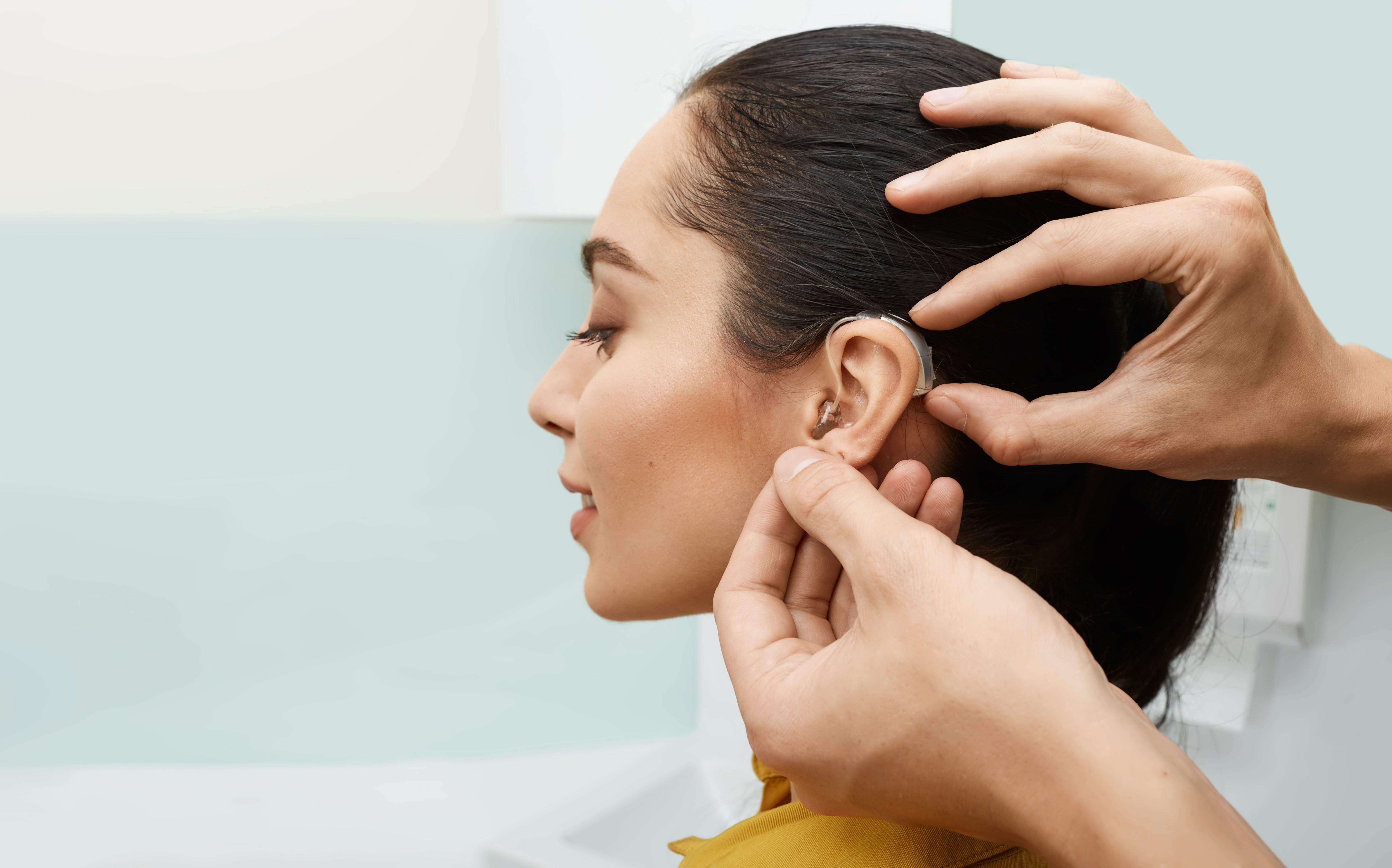
There are different forms of non-invasive VNS. Some technologies deliver stimulation around the neck, while transcutaneous auricular vagus nerve stimulation, or taVNS, involves areas of the outer ear reached by the auricular branch of the vagus nerve.
These approaches should not be treated as interchangeable. Wearable, handheld, neck-worn, and implanted VNS technologies differ in how and where stimulation is delivered.
Auricular stimulation has attracted particular research interest because branches of the vagus nerve can be reached at the skin of the ear. This allows electrical stimulation to be applied without surgery.
Measurable Shifts in Stress and Anxiety
Clinical research into non-invasive VNS does not rely solely on whether somebody says they feel calmer. Researchers can examine physiological measurements alongside reported outcomes to investigate responses to stimulation.
Heart rate variability is one measurement commonly encountered in nervous system research, while studies may also examine experiences such as anxiety and fatigue.
Heart Rate Variability and Stress
Heart rate variability (HRV) describes how much the time between heartbeats varies, which is a sign of how well the body handles stress.
HRV has become increasingly familiar because it can also appear in data from smartwatches and fitness trackers. However, HRV is not a direct measurement of vagus nerve activity and should not be treated as a simple score of vagus nerve health.
In research settings, HRV can be examined alongside other measures to provide information about physiological responses under particular conditions.
Research Into Anxiety
Anxiety can involve both mental and physical experiences, from persistent worry and racing thoughts to tension and feeling unable to settle.
This has made anxiety one of the outcomes examined in research involving forms of non-invasive vagus nerve stimulation. Researchers can compare reported symptoms under controlled conditions to investigate whether changes are associated with a particular intervention.
These studies contribute to understanding the possible applications of non-invasive VNS without suggesting that anxiety itself is caused by poor vagus nerve function.
Better Sleep and Sustained Energy
Stress and sleep often affect one another. Feeling tense or unable to switch off can make bedtime more difficult, while a poor night’s sleep can leave the following day feeling considerably harder.
Researchers have therefore investigated sleep and fatigue alongside other outcomes in studies involving forms of non-invasive VNS.
Exploring VNS and Sleep
Sleep is not a single process, and research can examine different aspects of it. Depending on the study, researchers might look at reported sleep quality or other defined sleep-related outcomes.
The interest in VNS and sleep fits within the wider investigation of the nervous system’s role in stress, rest and recovery.
What research does not establish is a universal timetable for improvement. Claims that someone should notice a difference after two or three weeks, for example, cannot be applied generally across non-invasive VNS technologies without evidence from the particular intervention being discussed.
Fatigue and Daily Life
Fatigue can be particularly frustrating because feeling exhausted does not necessarily mean someone finds it easy to rest. People sometimes describe the combination as being “tired but wired”.
Forms of non-invasive VNS have been studied in relation to fatigue, making it another area of interest within the wider research landscape.
Fatigue itself can have many causes, however. Feeling persistently tired should not be interpreted as evidence of poor vagus nerve function, nor can changes in fatigue automatically be attributed to a single nervous system mechanism.
Supporting the Nervous System During Stress
Feeling stuck in fight or flight can make ordinary periods of rest feel surprisingly difficult. But there is no single technique that teaches the nervous system to “reset”, and persistent stress should not be reduced to one nerve or physiological pathway.
Familiar approaches such as regular movement, adequate sleep, and finding practical ways to unwind can all form part of how people manage stressful periods. They are not direct forms of vagus nerve stimulation, but they remain common ways people create opportunities to slow down and recover.
Non-invasive vagus nerve stimulation takes a different approach by using electrical stimulation of the vagus nerve. Research continues to examine different forms of the technology and their relationship with measures associated with stress, rest, and recovery.
For anyone interested in wearable vagus nerve stimulation devices, understanding exactly what type of VNS is being discussed, and what the research on that particular technology has actually measured, is a useful place to start.
Research referenced in this article was conducted using Parasym’s neuromodulation technology under research conditions. Findings relate to specific study populations and should not be interpreted as medical claims or guaranteed individual outcomes. Nurosym is a CE-marked medical device in Europe.
Nurosym
care@nurosym.com
18 Saint Cross Street
4th Floor
London
England
EC1N 8UN
United Kingdom


