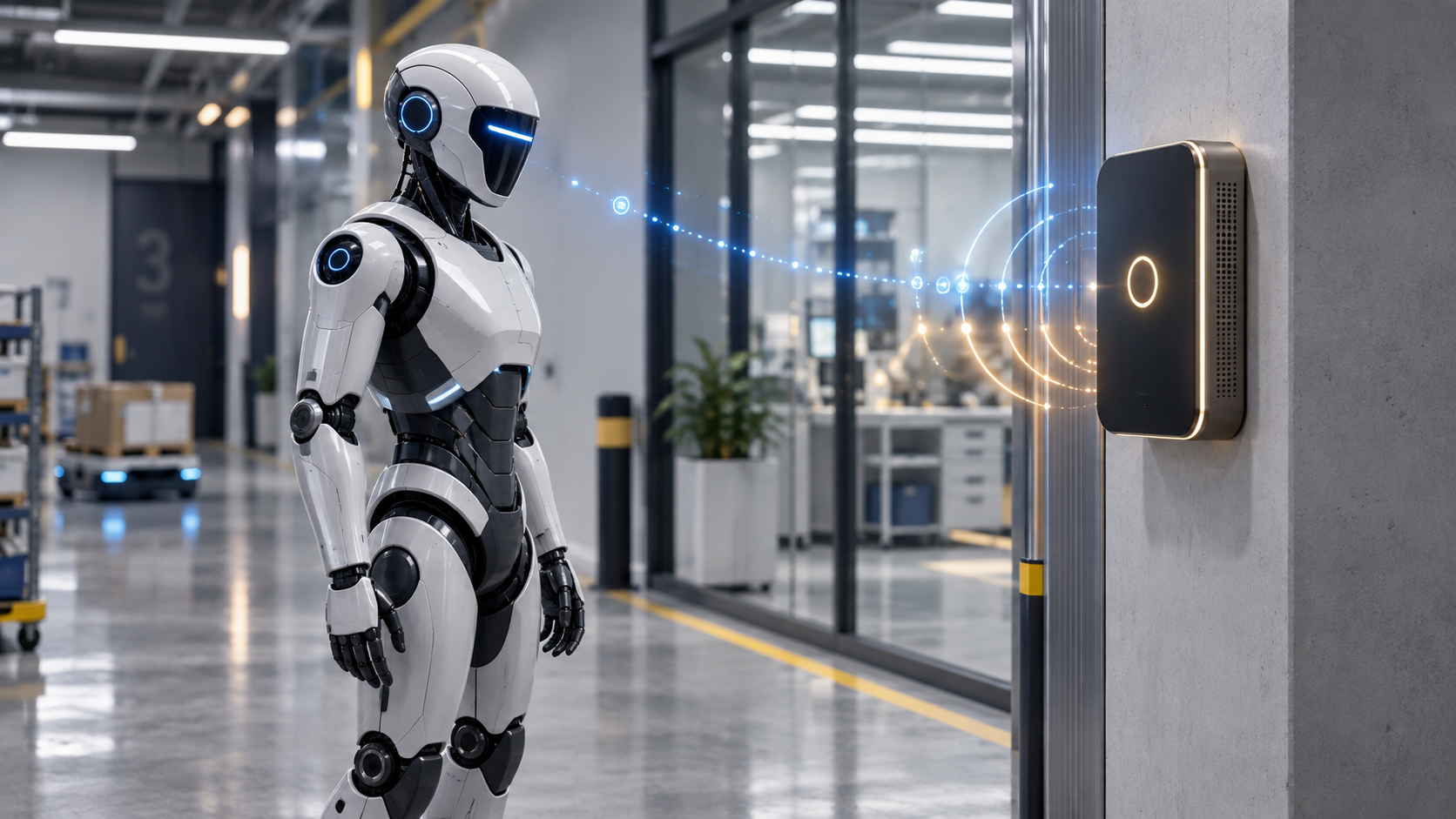
PowerOS is designed to help robot makers and fleet operators identify devices, authorize power access, meter energy and maintain auditable records.
HUNTINGTON BEACH, CALIFORNIA, CA, UNITED STATES, October 1, 2026 /EINPresswire.com/ — ATLAS Power Networks Inc. today announced that it is extending PowerOS, the software control layer being evaluated through its PowerLink X1 smartphone reference system, toward future humanoid and service-robot applications.
ATLAS is developing more than wireless-power hardware. It is developing a network layer designed to determine which devices may receive power, under what rules, how much energy they use and how each session is recorded.
The concept is similar to a payment network. Instead of authorizing a financial transaction, PowerOS is designed to authorize a power transaction: identify the device, verify its permissions, authorize the session, meter the energy and record the result.
“We didn’t build a phone app that happens to show a battery,” said Robert Smith, founder of ATLAS Power Networks. “We built a network loop: request, verify, authorize, meter and record. Smartphones provide a practical validation endpoint today. A robot could become another endpoint operating through that same model.”
Why Robot Fleets Need a Power Control Layer
Humanoid and service robots are increasingly being evaluated for factories, warehouses, hotels, hospitals and retail environments. Every robot needs dependable access to energy to remain in service. Today, that typically means returning to a charging dock, swapping batteries or going offline while charging.
As fleets grow, ATLAS believes operators will need more than a method of transferring electricity. They will need to answer important operational questions:
Which robot is requesting power?
Is the robot authorized to receive it?
What policies apply to the session?
How much energy was delivered?
Where should the session record be stored?
PowerOS is being developed as a control layer designed to address these questions. The internet required methods for authenticating devices, while digital-payment systems required methods for authorizing transactions. ATLAS believes wireless power will need its own trusted network layer as more machines become capable of requesting and receiving energy.
A Trust Layer Designed for Machines
“Trust has to come before access,” Smith said. “Whether the endpoint is a smartphone, a service robot or a future autonomous machine, it should identify itself, receive authorization and operate within policies established by the enterprise.”
Under the PowerOS model, a robot would not simply detect available power and begin drawing it. It would first identify itself, satisfy the organization’s authorization policies and operate within approved session limits. Each authorized session would then produce an auditable record.
The security architecture is also being designed with a migration path toward recognized post-quantum cryptographic standards for protecting device credentials, authorization messages and session records.
PowerOS does not control a robot’s movements, decisions or autonomous behavior. Its intended role is narrowly defined: determine whether an endpoint may access the power infrastructure, apply the applicable session policies, meter the energy and create an accountable record.
Integrate Once
Rather than requiring robot makers to build a separate power integration for every customer, market or cloud environment, ATLAS is developing PowerOS around a common API contract and energy-session model.
Regional API-gateway adapters are intended to address different enterprise, cloud and geographic deployment requirements without requiring a separate product for each market.
From Smartphone Validation to Robots
PowerLink X1 remains in controlled validation, providing ATLAS with a practical environment for evaluating device identity, authorization, telemetry, metering and session-record workflows.
The expansion toward robotics applies that same proposed session model to future robotic endpoints. It does not represent a completed or commercially available robot-charging capability.
PowerLink X2, ATLAS’s pre-silicon chip program for identity, authorization and power handling, is being developed for potential robotic integration after silicon becomes available and the required engineering validation has been completed.
Enterprise and OEM Strategy
ATLAS is approaching robotics as a business-to-business and OEM development opportunity involving robot manufacturers, fleet operators, enterprise pilot programs and private-label or ODM relationships. Robot makers and fleet operators can request a technical briefing under NDA.
ATLAS is also evaluating wearable mobility technology as an extension of its smart-power vision, with details to be announced when available.
ATLAS is advised on commercialization strategy by APEX Financial Partners, a strategic advisory firm.
Robot manufacturers, fleet operators and enterprises interested in future pilot, OEM or integration discussions may visit atlaspower.ai/contact or email info@atlaspower.ai.
About ATLAS Power Networks
ATLAS Power Networks Inc. is a U.S. company developing software-managed wireless-power infrastructure for enterprise applications. Its PowerOS architecture is designed to support device identity, authorization, telemetry, metering and audit-ready records for authenticated energy sessions.
ATLAS’s PowerLink reference systems remain under engineering development and controlled validation. Learn more at atlaspower.ai.
About APEX Financial Partners
APEX Financial Partners is a strategic advisory firm supporting companies across technology, financial services and emerging markets. APEX provides strategic advisory, commercialization support, brand development, market positioning and long-term business-growth services.
Important Development, Security and Regulatory Information
PowerLink X1 remains in controlled validation, including companion-app evaluation on supported smartphones. PowerLink X2 remains in pre-silicon development.
This announcement describes ATLAS’s software architecture and development direction. It does not represent commercial availability of robot wireless charging, physical power delivery to any robot, certified RF performance, FCC equipment authorization or a commercial relationship with any robot manufacturer or cloud provider.
References to post-quantum security describe a development roadmap, not certified protection or guaranteed cybersecurity. All future capabilities are subject to engineering validation, hardware development, commercial agreements and applicable regulatory approvals.
ATLAS will announce hardware, security and robot-integration milestones separately when supported by engineering evidence.
Robert Smith
ATLAS Power Networks Inc.
+1 714-686-3111
info@atlaspower.ai
Visit us on social media:
LinkedIn
Instagram
Facebook
YouTube
TikTok
X
From Smartphones to Robots: The PowerOS Architecture Being Designed
Legal Disclaimer:
EIN Presswire provides this news content “as is” without warranty of any kind. We do not accept any responsibility or liability
for the accuracy, content, images, videos, licenses, completeness, legality, or reliability of the information contained in this
article. If you have any complaints or copyright issues related to this article, kindly contact the author above.

Media gallery