Originally Posted On: https://www.theboxery.com/blog/do-premium-shipping-boxes-actually-lower-damage-rates-for-items-over-65-pounds/
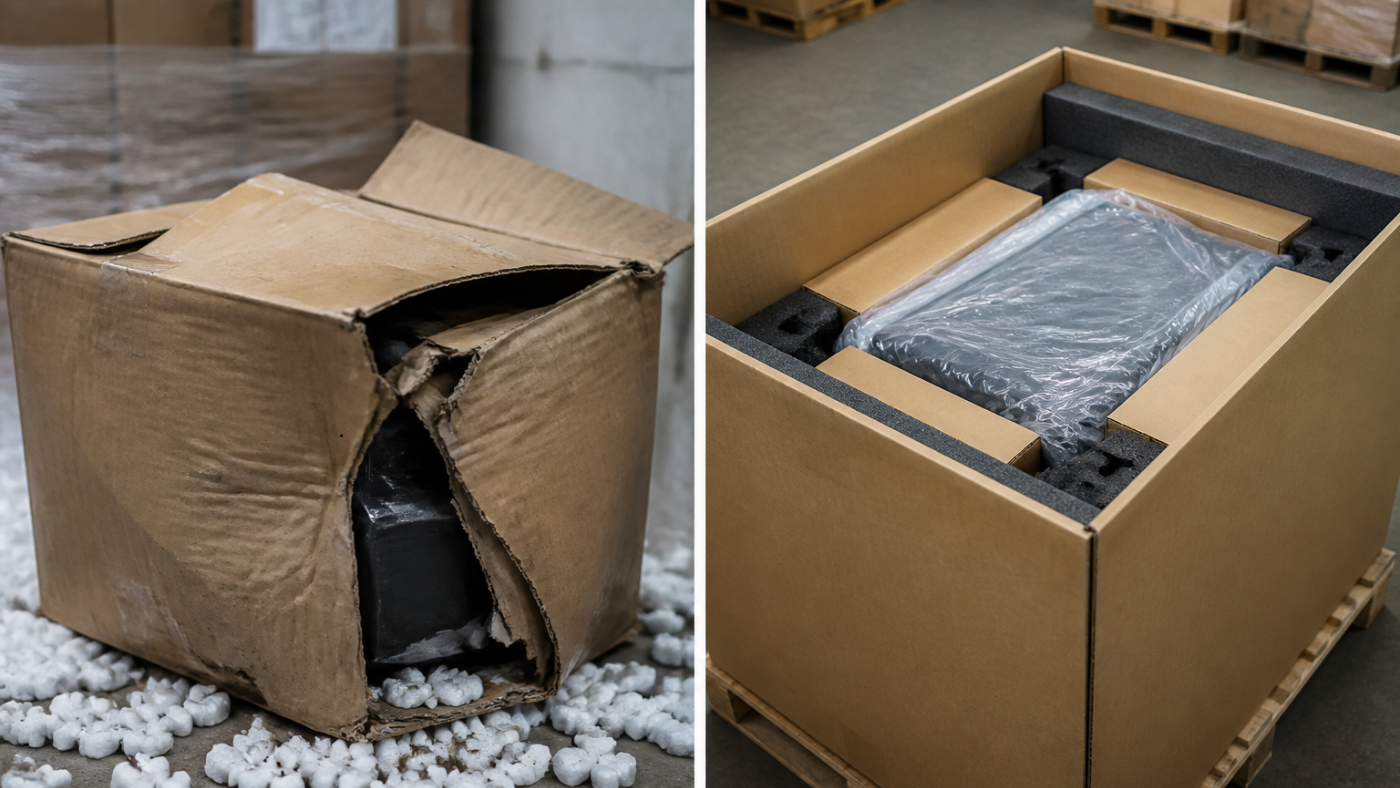
Key Takeaways
- Match shipping boxes to weight and density, not just product size; once a package pushes past 65 pounds, weak single-wall corrugated often fails under stacking pressure and rough delivery handling.
- Upgrade selectively to double-wall shipping boxes with higher ECT ratings for heavy orders that face freight movement, long transit paths, or repeated warehouse touches, because a stronger board can cut damage, returns, and reship labor.
- Right-size shipping boxes to reduce empty space, limit product shift, and trim dim weight charges; a tighter fit often does more for protection than paying extra for a bigger premium box.
- Test shipping boxes before a large order by running drop checks, stack checks, and short delivery trials, and track damage by box size, packing method, and service level to find the real failure point.
- Compare total shipping cost—not just box price—by adding refund risk, replacement product cost, labor, tape, void fill, labels, and repeat orders lost after a bad package arrives damaged.
- Build a short shipping boxes lineup around your highest-volume order profiles instead of stocking dozens of sizes; fewer, better-matched cartons usually make packing faster and keep supplies, storage, and packing errors under control.
Once a package pushes past 65 pounds, cheap packaging stops being a savings and starts acting like a liability. For brands shipping dense kits, bundled refills, bulk goods, or heavier subscription orders, the wrong shipping boxes can turn one rough handoff into a cracked product, a split carton, or a return that wipes out the margin on the whole order.
That weight threshold changes the math fast. A standard single-wall carton that works for a 12-pound order may buckle under stacking pressure, flex at the corners, or fail at the bottom seam when a driver shifts it, drops it, or loads it under other freight. In practice, stronger board grades do help—but not in every case, and not for the reason most teams think. The honest answer is that damage rates usually fall when the box, the fit, and the pack-out all get tighter at the same time. Miss one of those, and even a more expensive carton can still lose the fight.
Shipping Boxes for Heavy Items: What Changes Once a Package Crosses 65 Pounds
Why the 65-pound mark changes box choice, packing method, and freight risk
Think of 65 pounds as the point where packaging stops being routine and starts becoming load control. Once a product gets that heavy, shipping boxes need higher board strength, tighter sizing, and better packing discipline.
For heavy orders, teams often compare boxes for shipping by strength rating, not just price, because the wrong carton can turn one delivery into a replacement, a freight claim, and a customer service mess.
In practice, how to pack a box changes fast:
- Use double-wall board
- Reduce empty space
- Add pads at stress points
- Seal with reinforced packing tape
That shift also affects shipping boxes demand planning and shipping boxes fulfillment trends, since heavier SKUs usually need fewer carton sizes but tighter warehouse controls.
The data backs this up, again and again.
How crushing, drop impact, and stacking pressure affect large shipping boxes in transit
Heavy parcels rarely fail from one dramatic drop. They fail from repeated pressure—conveyor transfers, trailer stacking, and warehouse handling that compound weak spots.
Size choice matters. Shipping boxes 8x8x8 may work for dense parts, while an 18 x 8 x 8 box or a 14 x 14 x 8 box can spread weight better for awkward items.
Where standard single-wall shipping boxes fail on heavy orders
Single-wall board usually gives out at the edges first. That’s why flat, dense products often need 13x13x4 shipping boxes, and medium-weight kits may need 16 x 12 x 6 shipping boxes with less void fill than standard cartons. For brands buying wholesale shipping boxes, the savings only hold if damage rates stay low. If they don’t, the cheap box wasn’t cheap.
Do Premium Shipping Boxes Lower Damage Rates? The Direct Answer for Brands and Subscription Box Operators
Yes. But the margin gains disappear fast if the pack-out is sloppy. For heavy orders, better shipping boxes usually cut damage because double-wall board, stronger ECT ratings, and tighter sizing reduce panel flex, corner crush, and movement in transit.
What premium shipping boxes usually include: double-wall board, stronger ECT ratings, and tighter sizing
For items over 65 pounds, standard boxes for shipping often fail at the corners first. Better specs usually mean double-wall construction, higher ECT, and size discipline—an 18 x 8 x 8 box fits long dense items better than an oversized container, while shipping boxes 8x8x8 work for compact, heavy packs that need less void fill.
Buyers testing wholesale shipping boxes should match board strength to product density, not just weight. A 14 x 14 x 8 box or 13x13x4 shipping boxes can lower freight waste if the item geometry is consistent.
When higher-grade shipping boxes reduce returns, replacements, and customer complaints
In practice, the premium board helps most when brands ship one repeat SKU or a fixed subscription order. A cleaner fit means less movement, fewer broken inserts, and fewer support tickets—especially during rough delivery handoffs and warehouse sorting.
This is the part people underestimate.
That matters for shipping boxes demand planning and shipping boxes fulfillment trends, too. Fewer damage claims make reorder math cleaner.
When premium shipping boxes don’t fix damage because the real issue is void fill, tape, or poor pack-out
The honest answer is that stronger corrugate won’t rescue bad packing. If the item rattles, if tape fails, or if the team never learned how to pack a box, damage keeps showing up. Even 16 x 12 x 6 shipping boxes won’t help if the product can shift three inches inside.
How to Choose Shipping Boxes That Balance Protection, Branding, and Shipping Cost
A subscription brand ships a 72-pound order in a box that looks fine on the packing table. Two carrier scans later, the corners fail, and the item starts moving inside. That mistake usually starts with sizing, not luck.
For heavy orders, shipping boxes need to fit the product, the packing method, and the rate card at the same time.
Right-size shipping boxes to cut movement inside the package and lower the dim weight charges
Start with the item’s packed dimensions, not the raw product. Brands comparing shipping boxes 8x8x8, a 13x13x4 shipping boxes format, or a 16 x 12 x 6 shipping boxes option should leave about 1 to 2 inches for packing. Tight fit. Less shift.
Match board strength to product density, not just product price
Dense items need stronger boxes for shipping, even if the item isn’t fragile. A 14 x 14 x 8 box carrying 68 pounds performs very differently from an 18 x 8 x 8 box carrying apparel. In practice, that’s where how to pack a box matters—pad edges, block empty space, and tape all seams.
Decide between corrugated boxes, mailers, and freight-ready containers for different order profiles
Use this filter:
Here’s what that actually means in practice.
- Corrugated boxes for most DTC orders over 5 pounds
- Mailers for low-profile, non-breakable units
- Freight-ready containers for large multi-unit orders
Teams buying wholesale shipping boxes or tracking shipping boxes demand planning should map size mix to order history — current shipping boxes fulfillment trends.
How presentation matters for DTC unboxing without adding waste or excess box size
Branding still matters—but oversized boxes for shipping hurt margin fast. Clean print, tight inserts, and right-fit boxes for shipping do more than extra filler ever will.
Shipping Box Testing Methods That Actually Predict Delivery Damage
About 70% of heavy-package failures show up in testing long before a customer files a claim, yet plenty of brands still buy shipping boxes on sample feel alone. For items above 65 pounds, lab-style checks beat guesswork—especially when a box looks fine on the packing table but fails in a sort center or freight handoff.
Run drop tests, stack tests, and short shipping trials before placing a large order
Start with three checks:
- Drop test: 5 to 10 drops from 12 to 24 inches
- Stack test: 24 hours under top-load pressure matching warehouse and delivery conditions
- Short trial: 25 to 50 live orders before committing to wholesale shipping boxes
In practice, brands should test exact SKUs, not “close enough” sizes. That means comparing shipping boxes 8x8x8, 14 x 14 x 8 box, 13x13x4 shipping boxes, and 16 x 12 x 6 shipping boxes against the actual package, insert, label, and tape setup. Teams moving long or awkward items should also test an 18 x 8 x 8 box before a big order.
Track damage rate by box size, insert type, and carrier service level
Simple data wins. Track damage by box ID, insert type, carrier, service level, and delivery zone. A 2.5% breakage rate in one size of boxes for shipping is a pattern, not bad luck.
Let that sink in for a moment.
Use packing slips, labels, and internal order data to spot repeat failure patterns fast
So what catches problems fast? Match packing slips, tracking, and return notes to internal order data. Good teams fold that into shipping boxes demand planning and watch shipping boxes fulfillment trends for shifts in warehouse handling. That also sharpens training on how to pack a box—and shows which packing setup keeps damage low.
Lowering Total Shipping Damage Costs Without Overbuying Premium Boxes
Damage costs are usually driven by bad box matching, not box price alone.
-
Compare true loss, not unit cost
For boxes for shipping, the real calculator should include replacement cost, refund rate, labor, new label fees, and second delivery charges. A $1.10 carton that prevents one failed order out of 100 can beat a $0.68 option fast. Teams reviewing shipping boxes fulfillment trends should track claims by weight band, item type, and packing method.
-
Stock fewer sizes with intent
Most brands don’t need 30 SKUs sitting in the warehouse. A tighter lineup built around top orders—like shipping boxes 8x8x8, 13x13x4 shipping boxes, 16 x 12 x 6 shipping boxes, and a 14 x 14 x 8 box—cuts storage waste and speeds packing. Good shipping boxes demand planning starts with the top five order profiles, not edge-case orders.
-
Know when the heavier board earns its keep
Once the packed weight moves past 65 pounds, standard corrugated often fails at corners first—especially on long trips, rough freight handling, or stacked container loads. An 18 x 8 x 8 box carrying dense metal parts may need stronger walls, while lighter items in wholesale shipping boxes can still ship safely in standard stock if void fill is tight and tape holds. The honest answer on how to pack a box: stop item movement, protect edges, and match board strength to actual abuse, not fear.
Frequently Asked Questions
Where can someone get a box for shipping for free?
Free shipping boxes often come from local reuse sources like neighbors, office mailrooms, bookstores, grocery stores, and community give-away groups. The catch is consistency—free boxes can be worn out, oddly sized, or too weak for parcel delivery, so they work best for light items and low-risk packing jobs.
How can someone get free shipping boxes from USPS?
USPS offers free Priority Mail and Priority Mail Express boxes through its website and post office locations. Those shipping boxes can only be used with the matching USPS service, so they aren’t a free-for-all option for every order or every label.
What is the least expensive way to ship boxes?
The lowest-cost option usually comes down to three things: box size, package weight, and delivery speed. In practice, the cheapest method is often a right-sized box with minimal empty space, a standard ground service, and a label bought through a shipping platform that compares carrier rates instead of paying counter price.
Where can someone get USPS boxes for free?
USPS boxes are available free at post office counters and through online order pages for eligible mail classes. But here’s the thing: those supplies are tied to USPS Priority Mail services, so using them with another carrier or service level can trigger delivery problems and extra charges.
How do you choose the right shipping boxes for small business orders?
Start with the product, not the shelf.
Are custom shipping boxes worth it for a growing brand?
Sometimes yes, sometimes no. If a brand ships the same size order every day, custom shipping boxes can cut filler, reduce dim-weight charges, and clean up presentation; if order sizes swing all over the place, stock carton sizes usually make more financial sense.
Experience makes this obvious. Theory doesn’t.
What box strength is best for heavier packages?
For heavier products, standard single-wall cartons aren’t always enough. Boxes rated 32 ECT often handle everyday e-commerce shipments well, while denser items, glass, and multi-unit orders may need double-wall construction—especially if the package will move through long distribution chains.
Can oversized shipping boxes increase delivery costs?
Yes. And the increase can be brutal. Carriers don’t just price a package by scale weight anymore; dimensional pricing means a large box filled with air can cost more than a smaller, heavier package.
Should apparel and soft goods ship in boxes or mailers?
Soft goods like shirts, leggings, and non-breakable accessories usually do better in poly mailers because they take up less space in storage and lower shipping spend. Boxes still make sense for premium presentation, bundled subscription orders, or products that need structure to avoid crushing.
How many shipping box sizes should a brand keep in stock?
Most direct-to-consumer teams don’t need a wall of options. Three to five core shipping boxes usually cover the bulk of orders if the size plan is based on actual order history, average units per order, — the few awkward SKUs that always seem to wreck the packing table (every catalog has them).
The real takeaway is pretty simple: premium shipping boxes can cut damage on orders over 65 pounds, but only when the box is solving the actual failure point. If the product is dense, the transit path is rough, or pallet stacking pressure is part of the trip, stronger board — better sizing usually pays for itself fast. If the item is still sliding inside the carton or the seal is failing at the seam, a more expensive box won’t save the shipment.
That’s the part brand founders — subscription teams can’t ignore. The best packaging decision usually comes from matching board strength to product density, tightening pack-out, and testing a few real-world shipping boxes before rolling out a large buy (not after damage claims start piling up). Protection, presentation, and freight cost all matter, but they have to work together.
The next step is concrete: pull the top five heavy orders by volume, review their last 60 to 90 days of damage data, and run side-by-side pack tests with one upgraded box style and one improved interior pack-out.


