May 28, 2026 – PRESSADVANTAGE –
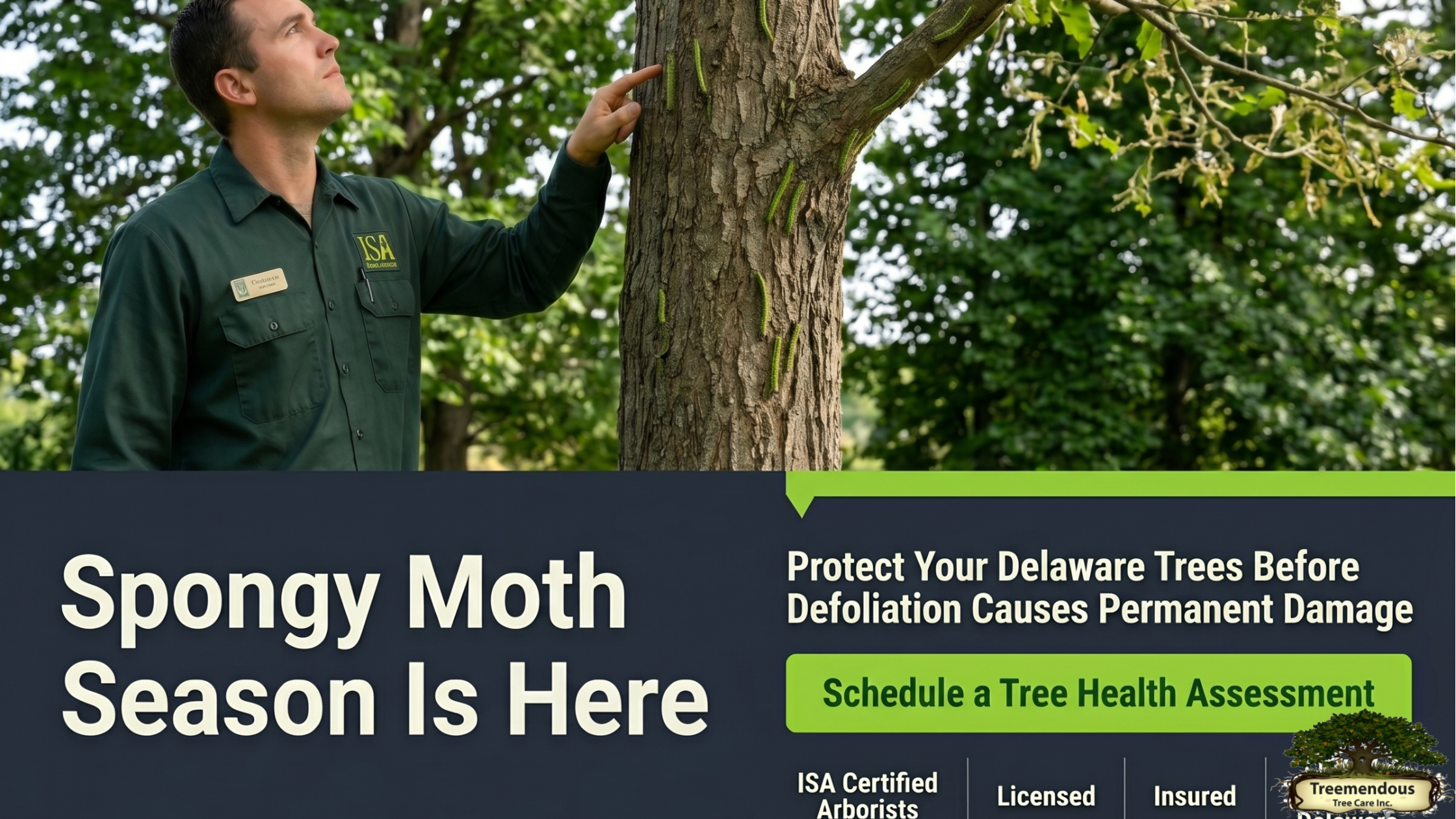
Treemendous Tree Care, a professional tree care company serving Wilmington and the surrounding Delaware region, is warning area property owners that the peak feeding period for Spongy Moth (Lymantria dispar dispar) caterpillars is now underway — and trees left unprotected face significant canopy loss during the active May and June defoliation window. The company is urging residents to schedule professional tree health assessments to evaluate infestation severity and implement treatment strategies before irreversible damage occurs.
Spongy moth is a destructive, invasive insect that poses a documented danger to North America’s forests. The caterpillars feed on the leaves of more than 300 species of trees and shrubs, and if left unchecked, this pest can strip leaves and even kill trees if severe defoliation persists for multiple seasons, according to the United States Department of Agriculture Animal and Plant Health Inspection Service (USDA APHIS). Native to Europe, the spongy moth first arrived in the United States well over a century ago and today can be found throughout the Northeastern United States, where it has dramatically changed the landscape. Read more at https://lifestyle.bossesmag.com/story/589307/treemendous-tree-care-warns-delaware-storm-season-is-weeks-away-and-untreated-spring-trees-are-at-risk.
Customer Gioia Krempa Google Review recently shared her experience with Treemendous Tree Care: “We had 3 trees removed. The Treemendous crew arrived on time, removed the trees, put the trunks, limbs & branches in the wood-chipper and cleaned up in record time. The entire process was extremely efficient. We would definitely call them again for any additional work.”
Delaware-Specific Defoliation Risk and Timeline: The Delaware Forest Service has confirmed that spongy moth caterpillars feed during May and June, with egg hatch beginning in late April or early May, depending on temperature. Small, dark caterpillars approximately 0.25 inches long emerge from overwintering egg masses that were laid by female moths during the previous July and August. Young caterpillars are carried by wind from tree to tree and spend most of their time in the treetops feeding, making early-stage damage difficult to detect from ground level, according to the University of Maryland Extension.
Spongy moth caterpillars prefer oak (Quercus) species but will also feed on sweetgum, linden, willow, birch, apple, alder, boxelder, hawthorn, and blue Colorado spruce. A large caterpillar population can defoliate acres of trees, and deciduous trees suffering more than 50 percent defoliation for two consecutive years will be significantly weakened and may die, according to research published by the University of Maryland Extension. The Delaware Forest Service has emphasized that healthy trees often do not die from one year of defoliation; however, severe defoliation for two continuous years or more is a more serious concern, as reported by WBOC News.
Scientific Research on Defoliation Impact and Tree Mortality: Peer-reviewed research from the University of Minnesota Conservancy documents that Lymantria dispar has plagued eastern deciduous forests since its introduction in the late 1800s, causing severe defoliation and sometimes subsequent disease and death. The study notes that the species’ capacity to destroy large forest stands and its evasiveness to complete eradication poses an indefinite problem to restoration ecologists, foresters, and conservationists striving to protect the health, balance, and survival of eastern broadleaved forests in North America.
According to research published in the journal Ecological Indicators, tree canopy defoliation reveals an overall growth reduction of approximately 42 percent in comparison to theoretical populations of undefoliated trees. The research confirms that defoliation makes trees more vulnerable to disease organisms and other insects, as documented by the Clinton County, Pennsylvania Spongy Moth Suppression Program. Depending on population density, larvae may cause complete tree defoliation, and several successive years of defoliation on plants result in the mortality of the plants.
Professional Tree Health Assessment and Treatment Options: ISA Certified Arborists conducting tree health assessments during the May-June defoliation period examine trees for characteristic damage patterns, including shot-hole feeding damage in leaves, visible caterpillars on trunks and branches, signs of egg masses on tree bark and outdoor items, and overall canopy density reduction. The USDA APHIS recommends that property owners look for spongy moth egg masses on trees, lawn furniture, fences, walls, and outdoor items, and report findings to Federal or State agriculture officials if they are not in a quarantine area.
Professional treatment strategies available during active infestations include sticky barrier bands around tree trunks for earlier, smaller stages of caterpillars, burlap or cloth collection traps, removal and disposal of egg masses in hot soapy water, and consultation with licensed pesticide applicators for chemical control options when populations exceed manageable thresholds, according to guidance from the Delaware Forest Service.
About Treemendous Tree Care: Treemendous Tree Care is a professional tree care company serving Wilmington and the surrounding areas of Delaware with eleven years of award-winning service. The company’s team includes certified arborists trained in tree risk assessment, pest and disease management, structural pruning, and safety protocols. Services include tree removal, stump grinding, pruning and trimming, tree health assessments, pest identification and treatment consultation, and emergency storm response. The company is fully licensed, insured, and bonded. Property owners seeking tree health assessments during the active spongy moth defoliation season can contact Treemendous Tree Care directly or visit https://treemendousinc.com.
###
For more information about Treemendous Tree Care & Arborist Trimming Service, contact the company here:
Treemendous Tree Care & Arborist Trimming Service
Gareth
302 353-0574
office@treemendousinc.com
PO Box 5675
Wilmington, DE 19808


