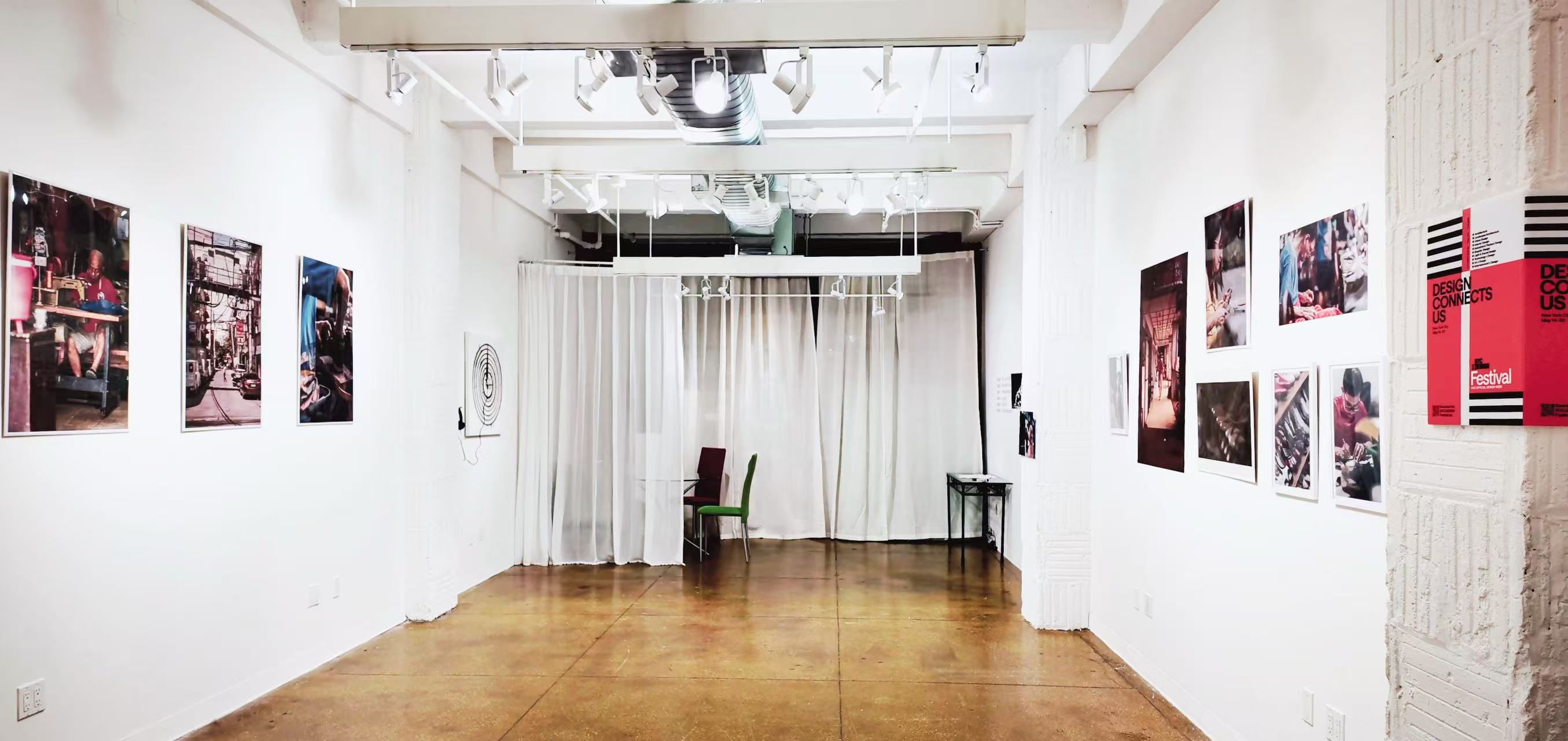
NEW YORK CITY, NY, UNITED STATES, June 1, 2026 /EINPresswire.com/ — ALT Alliance concluded Who Pays for Our Clothes? Part of the Lifecycle Project: Environmental Art Exhibition & Public Policy Research Project, as an official exhibition of the NYCxDESIGN Festival 2026.
The project was developed through interdisciplinary research dialogue and collaboration with sustainability and academic contributors, including Bruce Wang, Postdoctoral Research Fellow, School of Energy and Environment, City University of Hong Hong, and Lenka Lu, an academic curator and community policy researcher, Master of Development Practice’26 at UC Berkeley. Applying the framework of Life Cycle Assessment (LCA), the exhibition examined the hidden environmental and human systems embedded within the fashion industry, from raw material extraction and manufacturing to distribution, consumption, and disposal. Through sculpture, documentary photography, and interactive installation, the project invited audiences to reconsider the environmental and social costs embedded in everyday clothing consumption.
“For me, the surveys were as much a part of the exhibition as the artworks themselves,” said Lenka Lu. “We wanted to understand whether an artistic encounter with the clothing lifecycle could shift not just what people know, but what they feel responsible for. What came back was encouraging. Visitors left with a stronger sense that fashion’s environmental costs sit upstream, in how things are made and where materials come from, rather than simply in what gets thrown away. And across the board, support for systemic responses like transparency, producer accountability, and waste policy was higher after the visit than before. These early responses point to a relationship between artistic experiences, shifts in public understanding, and community policy engagement that we hope to continue exploring.”
The exhibition featured works by Wei-Chen Lou, Mingze Gao, and Qiuchi Chen, whose practices explored labor, ecological ethics, material circulation, waste systems, and humanity’s evolving relationship with the natural world.
As both an exhibition and a public-facing research initiative, the project incorporated pre- and post-exhibition audience surveys to examine how artistic experiences may influence public understanding of sustainability and consumer responsibility. Preliminary audience responses suggested that the exhibition encouraged visitors to reconsider how environmental impacts are distributed across the clothing lifecycle. Rather than locating fashion’s environmental costs within a single stage, participants repeatedly pointed to manufacturing and global supply chains, end-of-life disposal, and the shared responsibility of consumers, brands, and governments. The survey also indicated strong support for supply-chain transparency, extended producer responsibility, textile waste reduction policies, and more durable or secondhand clothing practices.
“As a researcher and academic curator, I see these early responses as evidence that art can translate life cycle thinking into a public, emotional, and policy-relevant conversation,” said Bruce Wang.
“Fashion is often experienced through aesthetics and trends,” said curator Chenyu Huang. “Through this exhibition, we hoped to slow down that process and invite audiences to reflect on the hidden systems, labor, materials, and environmental consequences embedded within what we wear every day. Art creates a space where sustainability becomes not only information, but also an emotional and human experience.”
Wei-Chen Lou’s documentary photography series With Our Hands highlighted artisan communities in Manila transforming recycled materials through traditional craftsmanship, emphasizing repair, labor, and the dignity of handmade processes. Mingze Gao presented an immersive interactive sound installation that translated the lifecycle of materials into seven interconnected soundscapes, guiding audiences through extraction, production, circulation, accumulation, waste, and environmental aftermath. Qiuchi Chen’s large-scale ceramic and metal sculpture Rebirth drew inspiration from Tibetan sky burial traditions to contemplate reincarnation, ecological ethics, and humanity’s spiritual relationship with the natural world.
Through the intersection of contemporary art, public engagement, and research, Who Pays for Our Clothes? sought to create space for dialogue surrounding sustainability, responsibility, and the future of material culture. For more information, visit www.artlawtech.org.
About ALT Alliance:
ALT Alliance is a 501(c)(3) nonprofit organization committed to fostering dialogue and innovation at the intersection of art, law, and technology. Through exhibitions, workshops and community-centered programs, ALT empowers artists to create socially engaged, forward-looking work.
PR
ALT Alliance
email us here
Legal Disclaimer:
EIN Presswire provides this news content “as is” without warranty of any kind. We do not accept any responsibility or liability
for the accuracy, content, images, videos, licenses, completeness, legality, or reliability of the information contained in this
article. If you have any complaints or copyright issues related to this article, kindly contact the author above.

Media gallery