TMS Found to Improve Cognition in Addition to Treating Depression, New Study Finds
PR Newswire
SAN ANTONIO, June 11, 2026
KEY FINDINGS
- First study of its kind: No prior published research has examined neurocognitive changes after a full 30-session TMS course in patients with treatment-resistant depression.
- Processing speed improved significantly: Patients showed meaningful gains in processing speed that is consistent with recovery patterns seen in non-depressed individuals.
- Self-reported cognitive function also improved: Patients reported significant improvement in executive functioning on a validated questionnaire.
- TMS addresses the full burden of depression: Depression impairs thinking and mental speed, not just mood. These findings suggest that TMS may help restore cognitive function alongside emotional well-being.
SAN ANTONIO, June 11, 2026 /PRNewswire/ — Recent research demonstrates that transcranial magnetic stimulation (TMS), a treatment widely used for depression, may also enhance cognitive function in patients with depression. A peer-reviewed study published in Transcranial Magnetic Stimulation, the first to assess outcomes after a complete 30-session treatment course, found that patients with treatment-resistant depression experienced significant improvements in processing speed and self-reported cognitive function following TMS.
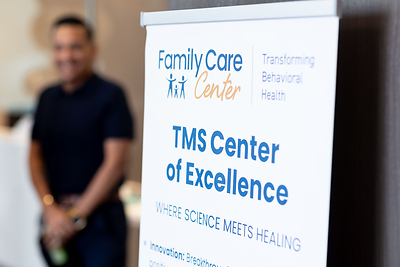
The study, conducted by researchers at the Family Care Center TMS Center of Excellence (TMS COE), contributes important evidence to the field of TMS research. While TMS is already known to improve mood, these results suggest it may also help bring back cognitive abilities lost to depression.
Depression affects more than mood
For many people, depression affects both emotions and thinking. Difficulty with thinking clearly, trouble focusing, poor memory, and problems with planning or making decisions are some of the hardest symptoms to manage. Struggles with processing information, working memory, and executive function can hurt work, relationships, and daily routines.
Most TMS research so far has mainly looked at mood changes or alleviation of depression symptoms. There was little evidence about how TMS affects the thinking problems linked to depression, and no earlier study had tracked these changes over a full 30-session treatment. This study’s goal was to address this gap.
What the study examined
The study included 15 patients with treatment-resistant major depressive disorder. Researchers measured their cognitive performance before and after 30 sessions of TMS to the dorsolateral prefrontal cortex (DLPFC), a brain area linked to mood, working memory, and executive function.
Patients first received high-frequency TMS to the left DLPFC, then intermittent theta burst stimulation (iTBS) to the right DLPFC. This sequential bilateral protocol has been the focus of several Family Care Center studies. Five patients also got extra iTBS to the left DLPFC. Researchers used a set of neuropsychological tests to measure processing speed, working memory, and executive function.
The use of rigorously validated assessment tools was a deliberate methodological choice. The study’s authors note that psychometrically sound measures are essential for drawing meaningful conclusions about neurocognitive change—a point with implications for how future TMS cognition research should be designed.
“We know that depression does not just affect how patients feel. It affects how they think, how fast they process information, and how well they can function in daily life. Understanding what TMS does to improve cognition, not just mood, is an important next step in delivering truly comprehensive care. At Family Care Center, we continue to focus on outcomes and novel collaborative approaches to improve the lives of our patients.”
— Dr. Chuck Weber, Founder and Chief Medical Officer, Family Care Center
Study findings: what the data show
Researchers used the Wilcoxon Signed Ranks Test with Bonferroni correction, a statistical method that works well with small samples and helps prevent false positives. Two measures improved significantly.
|
Cognitive Domain |
Measure Type |
Result |
Significance |
|
Processing speed |
Objective test |
↑ Significant improvement |
p = .006 ✓ |
|
Executive functioning |
Self-report questionnaire |
↑ Significant improvement |
p = .008 ✓ |
|
Working memory |
Objective test |
No significant change |
p = .19 |
|
Executive functioning |
Objective task-based test |
No significant change |
p = .04 (ns) |
Statistical significance determined by Wilcoxon Signed Ranks Test with Bonferroni correction (α = .0125). “No significant change” does not indicate no effect; it indicates results did not reach the corrected significance threshold in this sample. n = 15.
The improvement in processing speed is particularly meaningful. Slowed processing speed is one of the most consistent cognitive deficits associated with depression, and the gains observed in this study aligned with performance levels seen in non-depressed individuals — suggesting that TMS may help restore, not just improve upon, baseline cognitive function.
The difference between what patients reported and what tests showed for executive function is also important. Patients said they thought more clearly, but this was not always seen in the test results. The authors suggest this gap may be due to the fact that executive functions encompass many skills, and different tests measure different things. They recommend that future research looks more closely at specific areas of executive function.
“These findings move the conversation forward in an important way. We know TMS works for depression. Now we are beginning to understand its broader impact on how patients think, process, and function. That understanding will only deepen with continued research.”
— Dr. Sabrina Segal, Director of Research, Family Care Center
Why this matters: cognition as a measure of recovery
Depression is usually measured by how patients feel. However, for many people, cognitive symptoms like brain fog, slow thinking, and trouble making decisions are just as disabling as feeling sad. Someone who feels less sad but still cannot focus at work, keep up in conversations, or handle daily tasks is not fully recovered.
Based on this study, cognitive outcomes should be a regular part of how TMS treatment is measured. If TMS helps with processing speed and how patients feel about their thinking, it can make a real difference in daily life—something depression rating scales may miss. Tracking these results also helps doctors talk more fully with patients about what to expect from treatment.
By using validated neuropsychological tests and strict statistical corrections, this study sets a standard for future studies in this field. The authors point out that looking at thinking skills before and after a full TMS course has not received enough attention, and this study is just the beginning.
About the study
The study, TMS Effects on Neuropsychological Functioning in Patients With Treatment-Resistant Major Depressive Disorder, was published in the journal Transcranial Magnetic Stimulation. The authors include Sophie Miller, M.S., Eric Pierson, Ph.D., Sabrina K. Segal, Ph.D., Holmes Finch, Ph.D., Jocelyn Bolin, Ph.D., Charles L. Weber, D.O., Stephanie Spies-Upton, Ph.D., Katrina Youngblood, B.A. The study evaluated 15 patients with treatment-resistant major depressive disorder using a battery of validated neuropsychological assessments at baseline and following a full 30-session TMS course.
The Family Care Center TMS COE in San Antonio leads cutting-edge research and clinical advancement, helping the organization deliver transformative care and breakthrough outcomes to patients across the country. It develops evidence-based protocols and contributes peer-reviewed findings to the wider field of interventional psychiatry.
ABOUT FAMILY CARE CENTER
Family Care Center is a national leader in mental health services, dedicated to positively impacting the well-being of local communities. Our top-rated, multi-specialty clinicians deliver comprehensive, evidence-based care, providing positive outcomes for patients of all ages. In addition to therapy, psychiatry, and IOP, we are at the forefront of transcranial magnetic stimulation (TMS), an innovative treatment for depression and more. Founded in 2016, Family Care Center is one of the fastest-growing mental health care providers in the U.S., providing patient care, conducting research, and offering continuing medical education in our field. With nearly 50 locations across Arizona, Colorado, Florida, Tennessee, and Texas, we continue to expand nationally in collaboration with Revelstoke Capital Partners.
RESOURCES & LINKS
Read the full study | Family Care Center TMS Center of Excellence | TMS treatment | Research & education | Make an appointment | Refer a patient

 View original content to download multimedia:https://www.prnewswire.com/news-releases/tms-found-to-improve-cognition-in-addition-to-treating-depression-new-study-finds-302798234.html
SOURCE Family Care Center


