
REEDVILLE, VA / ACCESS Newswire / July 20, 2026 / We thank The Virginian-Pilot and Daily Press for respectfully providing the opportunity for both sides of an Atlantic menhaden debate to appear in their pages. In a June 30 guest column, Ocean Harvesters CEO Monty Deihl questioned whether an academic paper recently published with Dr. Bryan Watts as the lead author is appropriate to use in arguments against menhaden fishing in the Chesapeake Bay. On July 6, Dr.Watts responded.
We wholeheartedly agree, as Dr. Watts said in his response, that repeating misinformation should not happen. But repeating misinformation is precisely what Dr. Watts and others have done. In the interest of producing the fairest and most open response, we are including a bibliography of all scientific, regulatory, and other sources referenced.
1. Dr. Watts has now publicly confirmed the central point: his paper does not link poor osprey reproduction to menhaden harvest.
Dr. Watts writes: “Deihl is incorrect in suggesting that our paper attempts to link poor osprey reproduction to menhaden harvest. We do not.”
But Mr. Deihl did not say the paper itself makes that link. What he said was that the paper “will almost certainly be used to argue for harsh restrictions on this well-regulated fishery.”
The Chesapeake Bay Foundation has already issued a press release explicitly using Dr. Watts’ study under the headline “New Study Links Starving Chesapeake Bay Osprey to Menhaden Woes.” In that release, CBF stated that the report “adds urgency for pausing menhaden reduction fishery in the Bay” and quoted Forage Campaign Manager Will Poston as saying: “Ultimately, decision makers must pause reduction fishing inside the Bay until menhaden research is completed.”
That is exactly what Mr. Deihl warned would happen. The paper is being used to argue for harsh restrictions on the well-regulated Chesapeake Bay menhaden fishery. And given Dr. Watts’ own public statement that his paper does not link poor osprey reproduction to menhaden harvest, CBF and Mr. Poston are wrong to use his paper as the basis for pausing reduction fishing in the Bay.
An academic paper may raise important ecological questions. It may identify food stress in osprey nests and support further research into prey availability, environmental conditions, and other factors. But unless it demonstrates a causal connection to menhaden harvest, it cannot be presented to the public or regulators as though that causal connection has been established.
When a paper that expressly does not link osprey reproduction to harvest is nevertheless used to demand fishery-specific restrictions, the public is no longer being given science. It is being given advocacy dressed in scientific language.
2. The “intercept fishery” or “gauntlet” theory is not supported by the available evidence.
Dr. Watts repeats the claim that Ocean Harvesters is operating an “intercept fishery,” catching menhaden at the mouth of the Bay and preventing fish from reaching the rest of the Chesapeake. That theory is contradicted by the analyses now before managers.
The theory ignores basic menhaden life history. Menhaden are not a static Bay-resident population. NOAA Fisheries explains that mature menhaden spawn in coastal waters, and juveniles remain in estuaries such as the Chesapeake Bay for about a year before joining adult schools. Many menhaden are migratory, and others remain resident in their area. NOAA also notes that menhaden are common in all Chesapeake Bay salinities and swim in large surface schools during spring, summer, and fall. That life history is hard to square with a simple “intercept” story that assumes one lower-Bay fishery is blocking a single, predictable flow of fish to the rest of the Bay. Equally important, Virginia law does not allow the menhaden reduction fishery to begin before the first Monday in May, and actual fishing activity often starts later.
A January 2026 analysis conducted by Georgetown Economic Services of Washington, D.C. and submitted to the Atlantic States Marine Fisheries Commission directly addressed the so-called “gauntlet” theory. It explained that if the purse seine fleet were preventing menhaden from traveling into the upper Bay, pound-net catch rates should show a corresponding steep decline during the relevant weeks. Instead, the submitted analysis found that pound-net catch rates remained on a relatively steady increase through the season. The same submission reported that, in months when Virginia reduction purse-seine net sets exceeded their 10-year average, Maryland pound-net harvest also tended to be above its 10-year average; the converse was also true. The submission concluded that the relationship did not support the “gauntlet” claim.
A second analysis by estuarine scientist Dr. Arnoldo Valle-Levinson focused on Chesapeake Bay physics and environmental conditions. Rather than assuming an “intercept” mechanism, it examined how summer Bay conditions can compress livable habitat and affect where fish concentrate and how catchable they are. The same public summary reports that Maryland catches and trips both declined together, while catch per unit effort did not show the steady collapse one would expect if the upper Bay were being systematically starved of fish.
Dr. Watts compares the issue to water withdrawals on the Rio Grande affecting downstream farmers, but fish are not water. Water flows downstream in one direction; menhaden are migratory schooling fish whose movement and availability depend on season, age, salinity, temperature, dissolved oxygen, plankton, predator pressure, and other Bay conditions. The analogy assumes a simple one-way flow that does not exist in a dynamic fishery. That is why the “intercept” or “gauntlet” theory must be tested against actual fishery data, timing, catch rates, effort, and Bay conditions.
3. Food stress in osprey nests is not proof that one fishery caused reduced prey availability.
We do not dismiss osprey observations. We do not dismiss food stress. We do not dismiss the ecological importance of menhaden. Menhaden are an important forage fish, and ospreys are important indicators of aquatic ecosystem conditions.
But an indicator is not a cause.
Earlier Chesapeake Bay osprey diet studies show why food stress cannot be evaluated through menhaden alone. Glass & Watts reported that Atlantic menhaden and seatrouts/weakfish were dominant prey in lower-estuarine nests – meaning nests in the saltier lower Bay, closer to where the Chesapeake meets the Atlantic Ocean and freshwater mixes with seawater – while gizzard shad and catfish dominated upper-estuarine diets (Glass & Watts 2009). Their Table 1 shows that spotted seatrout were more frequent than menhaden by number in lower-estuarine nests, 28.8% versus 24.2% (Glass & Watts 2009, Table 1). Lazarus et al. later reported that Poplar Island ospreys fed predominantly on striped bass, 47.8% of diet, and Atlantic menhaden, 44.3% of diet, while ospreys on the Susquehanna, Anacostia/middle Potomac, and James Rivers fed predominantly on catfish and gizzard shad (Lazarus et al. 2016).
That broader prey-base context matters because one of those prey species, striped bass, remains overfished. ASMFC says Atlantic striped bass was declared overfished in 2019 and remains overfished under the 2024 stock assessment update (ASMFC 2024 Atlantic Striped Bass Stock Assessment Update; ASMFC Atlantic Striped Bass Species Page). ASMFC also reports that in 2024 the recreational sector accounted for about 85% of total striped bass removals by number of fish, and that from 2022-2023 recreational harvest and recreational release mortality together accounted for roughly 89% of total removals (ASMFC Atlantic Striped Bass Species Page; ASMFC 2024 Atlantic Striped Bass Stock Assessment Update). Watts’ own research shows that deliveries of other prey species declined at a steeper rate than menhaden between 2006-07 and 2021 (Watts et al. 2024, Table 2). If osprey food delivery is now insufficient, the more relevant question is whether availability of the full prey base – including striped bass, seatrout/weakfish, gizzard shad, catfish, and menhaden – has changed, and why.
In his response, Watts states that “[w]hile it is true that ospreys have a varied diet, all fish are not the same,” claiming that menhaden are more nutritious because they are “rich in oils.” Dr. Watts is correct that menhaden are generally an oily forage fish, but “oily” is not a fixed condition throughout the year. A NOAA/NMFS study of Atlantic menhaden from the Chesapeake Bay area found strong seasonal variation in oil content, with early-season fish averaging roughly 8-10% lipid content, compared with about 20% at the October peak (Dubrow et al. 1976). Resident forage species also matter: Maryland DNR describes gizzard shad as present across Maryland’s Chesapeake river systems and spawning during the same spring period when osprey nesting begins, which reinforces the need to evaluate the full prey base rather than assume menhaden alone explain spring food stress. Because osprey breeding begins in spring, before menhaden reach peak oil content, the question is not whether menhaden are nutritious in general. The question is whether spring menhaden are uniquely more valuable than other prey actually available to nesting ospreys at that time, including resident forage species such as gizzard shad.
Timing is important. The Watts et al. paper states that Chesapeake Bay osprey pairs return to breeding territories from late February through late March and lay clutches in early April. Virginia law identifies the relevant menhaden purse-net season in certain waters as running from the first Monday in May through the third Friday in November. If nest initiation, egg-laying, or non-laying behavior is already being set before the reduction fishery is active, those early reproductive outcomes cannot be attributed to harvest later in the season.
USGS describes the Chesapeake osprey question as one involving menhaden and other fish prey, while stating that ongoing work is intended to help determine whether prey delivery or other environmental factors are affecting reproductive success.
The 2026 Watts et al. paper itself lists multiple factors that may influence menhaden abundance in the Chesapeake Bay, including commercial harvest, predation, competition, recruitment, plankton availability, larval transport, temperature, salinity, water quality, and other environmental conditions.
The 1980s comparison also needs context. Dr. Watts points to a period when menhaden made up a higher percentage of osprey deliveries, but Chesapeake striped bass were then at historic lows. The University of Maryland Center for Environmental Science reports that by the mid-1980s striped bass had fallen to the lowest numbers in decades. A peer-reviewed study of Chesapeake Bay striped bass management likewise reported that commercial landings reached a record high in 1973 and then declined by almost 90 percent during the following decade, with depressed juvenile production during the 1970s. A period when a major menhaden predator was severely depleted is not a neutral baseline for judging today’s osprey diet composition. Furthermore, there were only 3,500 osprey breeding pairs in the mid-1990s (fewer in the 1980s). There are10,000 breeding pairs today (Watts et al. 2026).
The timeline also undercuts the blame-the-fishery narrative. Chesapeake ospreys rebounded during decades when Bay menhaden harvests were much higher than they are today. The Bay reduction fishery is now capped at 51,000 metric tons – roughly one-third of levels seen during portions of the osprey rebound from the 1970s through the early 2000s. Ospreys recovered while the Bay menhaden fishery was far larger.
It is also important to understand why this debate exists in the first place. While Dr. Watts now says his 2026 paper does not link poor osprey reproduction to menhaden harvest, prior work by Dr. Watts and colleagues went much further. In their 2023 Mobjack Bay osprey food-supplementation study, Academia & Watts acknowledged that “local levels of menhaden abundance were not available,” but nevertheless concluded that “the menhaden population within Mobjack Bay is not currently adequate to sustain the osprey breeding population” and recommended that “industrial purse seine fishing occur outside Chesapeake Bay” (Academia & Watts 2023). A later Watts et al. paper likewise acknowledged that “no menhaden stock index has been developed that is specific to the Mobjack Bay study area,” yet argued that osprey viability required menhaden to be restored to 1980s levels (Watts et al. 2024). That is the leap at the heart of the dispute: food limitation may be real, and menhaden may be important prey, but those facts do not prove that the menhaden fishery caused the condition observed in Mobjack Bay.
A Frontiers in Marine Science commentary on the Mobjack Bay osprey paper raised related scientific concerns. The commentary noted that Watts et al. relied on coastwide juvenile menhaden abundance indices as a proxy for menhaden availability to ospreys in Mobjack Bay. Those indices are model-based estimates drawn from surveys spanning a large portion of the Atlantic coast, from Rhode Island to South Carolina. The concern is straightforward: a coastwide juvenile index is not the same thing as measuring the local abundance, size, timing, and availability of menhaden to nesting ospreys in one Chesapeake Bay sub-estuary. As the commentary explained, the analysis assumed that those broad indices represented the menhaden actually available to ospreys in Mobjack Bay – an assumption that had not been directly tested (Latour, Gartland, and Ralph, 2024). That distinction matters because a study may show that ospreys benefit from more menhaden without proving that the menhaden fishery caused the local prey conditions observed at those nests.
That is why Latour et al. concluded that Watts et al.’s analyses “do not establish a clear relationship with menhaden abundance and availability” and encouraged concurrent osprey nest and menhaden sampling to directly assess the ecological linkage (Latour et al. 2024). That is also why Ocean Harvesters has supported new Bay-specific menhaden research rather than policy decisions based on inference, proxy indices, or advocacy claims that go beyond the available data.
The relevant question is not simply whether some osprey nests show food stress. The relevant question is what caused the food stress, whether it is connected to adult menhaden abundance, whether adult menhaden abundance is connected to harvest, and whether any proposed fishery restriction would actually address the cause.
Those links have not been demonstrated.
4. Coastwide stock science is not a distraction; it is the official management foundation.
Dr. Watts argues that Ocean Harvesters has used the Atlantic States Marine Fisheries Commission’s coastwide stock assessment to suggest, “without evidence,” that Chesapeake Bay menhaden conditions remain healthy. That framing is misleading.
No one should pretend that coastwide stock status answers every Bay-specific question. Bay-specific abundance, movement, predator availability, and localized ecological conditions are legitimate research questions. But it is equally wrong to dismiss the official coastwide assessment as irrelevant. Atlantic menhaden are a migratory species managed through a coastwide interstate process because the stock moves across state boundaries and in and out of estuarine systems.
The ASMFC’s 2025 stock assessment update states that, using the current ecological reference point benchmarks, “the Atlantic menhaden population is not overfished and overfishing is not occurring.”
Coastwide science does not prove every Bay-specific claim, but it does provide the official management baseline. Meanwhile, Bay-specific claims require Bay-specific evidence.
The absence of a validated Bay-specific adult abundance index does not license advocates to substitute osprey diet observations, bait landings, or anecdotes for proof of fishery-caused depletion. It means the Bay-specific science needs to be done.
And that is exactly the work the industry has supported. Through the Science Center for Marine Fisheries, industry members have supported a Chesapeake Bay menhaden research roadmap to identify the data and methods needed to develop a scientifically defensible and ecologically meaningful Bay harvest cap. That project brings together researchers from the Chesapeake Biological Laboratory, the Virginia Institute of Marine Science, and NOAA to evaluate the research needed to answer Bay-specific management questions.
More recently, with support from Ocean Harvesters and Omega Protein, Virginia approved $2 million for menhaden research in the Chesapeake Bay. The funding will go to William & Mary’s Virginia Institute of Marine Science for research over the next two years, in collaboration with the Virginia Marine Resources Commission. That is the proper path forward: identify the data gaps, fund the science, and let the results guide management – rather than using a paper that does not link osprey reproduction to harvest as a justification for fishery-specific restrictions.
5. Certification and independent review also matter.
The U.S. Atlantic menhaden purse-seine fishery has been certified by the Marine Stewardship Council since 2019.
MSC certification is an independent third-party assessment process that represents a global gold standard for sustainability. Reasonable people can debate management choices, but the public should know that this fishery has passed rigorous sustainability review beyond being managed by the ASMFC.
6. Bait landings are not adult menhaden abundance indices.
Dr. Watts points to bait fishermen and homeowners watching osprey nests as evidence that menhaden abundance has changed. These observations may be worth investigating, but they are not substitutes for a validated adult abundance index.
Bait landings can change because fish are less abundant. They can also change because effort changes, markets change, labor availability changes, gear use changes, weather changes, fish distribution changes, or environmental conditions affect catchability. That is why the “gauntlet” analyses matter: they look at catch rates, effort, timing, and environmental conditions rather than assuming that lower landings equal fishery-caused depletion.
The right path is Bay-specific science, not Bay-specific blame.
Ocean Harvesters and the broader menhaden industry support better Chesapeake Bay science. We support research that can answer the questions regulators actually need answered: adult menhaden abundance in the Bay, movement between coastal and Bay waters, local availability to predators, fishery interactions, environmental drivers, and the real effects of any proposed management measure.
The wrong approach is to begin with blame and then look for facts to support it.
Dr. Watts’ column asks the public to view Ocean Harvesters as the source of misinformation. But the public record shows a different story.
-
The “gauntlet” theory he cites is contradicted by analyses submitted to ASMFC.
-
USGS frames the osprey question as a multi-factor ecological investigation.
-
ASMFC says menhaden are not overfished and overfishing is not occurring.
-
ASMFC manages menhaden with ecological reference points specifically designed to account for predator needs.
-
Earlier Chesapeake Bay osprey diet studies, including Watts’ own (Glass & Watts 2009), found that ospreys relied on a broader prey base than menhaden alone, including seatrouts/weakfish, striped bass, gizzard shad, and catfish, during periods when Bay osprey populations were growing.
-
Chesapeake Bay ospreys rebounded when menhaden harvests were much higher than they are today. The Bay reduction fishery is now capped at roughly one-third of levels seen during portions of that rebound period.
That is the scientific and regulatory record.
We invite readers to review it for themselves.
Source Links
-
Access Newswire – “Statement by Monty Deihl, Ocean Harvesters CEO, on Governor Spanberger’s Amendments Restoring Funding for Virginia Chesapeake Bay Menhaden Study”: https://www.accessnewswire.com/newsroom/en/industrial-and-manufacturing/statement-by-monty-deihl-ocean-harvesters-ceo-on-governor-spanbergers-1183322
-
Academia, Michael H., and Bryan D. Watts – “Food Supplementation Increases Reproductive Performance of Ospreys in the Lower Chesapeake Bay,” Frontiers in Marine Science, 2023: https://www.frontiersin.org/journals/marine-science/articles/10.3389/fmars.2023.1172787/full
-
Atlantic States Marine Fisheries Commission – 2025 Atlantic Menhaden Single-Species Stock Assessment Update: https://asmfc.org/wp-content/uploads/2025/11/2025AtlMenhadenSingleSpeciesAssmtUpdate_October2025.pdf
-
Atlantic States Marine Fisheries Commission – Atlantic Menhaden Assessments Overview: https://asmfc.org/wp-content/uploads/2025/11/AtlanticMenhadenAssessmentsOverview_October2025.pdf
-
Atlantic States Marine Fisheries Commission – Atlantic Menhaden Fact-Check FAQ: https://asmfc.org/news/fact-check/atlantic-menhaden-faqs/
-
Atlantic States Marine Fisheries Commission – Atlantic Menhaden Frequently Asked Questions: https://asmfc.org/wp-content/uploads/2025/11/Menhaden-FAQ-Oct2025.pdf
-
Atlantic States Marine Fisheries Commission – Atlantic Menhaden Management Board Supplemental Materials, February 2026: https://asmfc.org/wp-content/uploads/2026/01/AtlMenhadenBoardSupplemental_Feb2026.pdf
-
Atlantic States Marine Fisheries Commission – Atlantic Menhaden Stock-Status Page: https://asmfc.org/stock-assessment/atlantic-menhaden/
-
Atlantic States Marine Fisheries Commission – Atlantic Striped Bass Species Page: https://asmfc.org/species/atlantic-striped-bass/
-
Atlantic States Marine Fisheries Commission – 2024 Atlantic Striped Bass Stock Assessment Update: https://asmfc.org/wp-content/uploads/2025/01/2024_AtlStripedBassAssessmentUpdate.pdf
-
Atlantic States Marine Fisheries Commission – 2024 Atlantic Striped Bass Stock Assessment Press Release: https://asmfc.org/news/press-releases/atlantic-striped-bass-stock-assessment-update-finds-resource-remains-overfished-with-a-less-than-50-chance-of-rebuilding-by-2029-2/
-
Chesapeake Bay Foundation – “New Study Links Starving Chesapeake Bay Osprey to Menhaden Woes”: https://www.cbf.org/news/new-study-links-starving-chesapeake-bay-osprey-to-menhaden-woes/
-
Dubrow, David L., Malcolm B. Hale, and Anthony P. Bimbo – “Seasonal Variations in Chemical Composition and Protein Quality of Menhaden,” Marine Fisheries Review 38(9), 1976: https://spo.nmfs.noaa.gov/sites/default/files/pdf-content/MFR/mfr389/mfr3892.pdf
-
Glass, K. Andrew, and Bryan D. Watts – “Osprey Diet Composition and Quality in High- and Low-Salinity Areas of Lower Chesapeake Bay,” Journal of Raptor Research 43(1):27-36, 2009: https://www.researchgate.net/publication/254441715_Osprey_Diet_Composition_and_Quality_in_High_and_Low_Salinity_Areas_of_Lower_Chesapeake_Bay/link/547cf4f90cf2cfe203c1ff30/download?_tp=eyJjb250ZXh0Ijp7ImZpcnN0UGFnZSI6InB1YmxpY2F0aW9uIiwicGFnZSI6InB1YmxpY2F0aW9uIn19
-
Latour, Robert J., John Gartland, and Gary M. Ralph – “Commentary: Demographic Response of Osprey Within the Lower Chesapeake Bay to Fluctuations in Menhaden Stock,” Frontiers in Marine Science, 2024: https://www.frontiersin.org/journals/marine-science/articles/10.3389/fmars.2024.1416687/full
-
Lazarus et al. – “Chesapeake Bay Fish-Osprey (Pandion haliaetus) Food Chain: Evaluation of Contaminant Exposure and Genetic Damage,” Environmental Toxicology and Chemistry, 2016: http://digitalcommons.unl.edu/usgsstaffpub/966
-
Marine Stewardship Council – U.S. Atlantic Menhaden Purse-Seine Fishery Certification Page: https://fisheries.msc.org/en/fisheries/u.s-atlantic-menhaden-purse-seine/%40%40assessments
-
Maryland Department of Natural Resources – American Gizzard Shad Fish Facts: https://dnr.maryland.gov/fisheries/Pages/Fish-Facts.aspx?fishname=American+Gizzard+Shad
-
Menhaden Fisheries Coalition – SCEMFIS-Funded Chesapeake Bay Menhaden Research Roadmap Announcement: https://www.menhaden.org/scemfis-funds-chesapeake-bay-menhaden-research-roadmap-to-inform-a-scientifically-defensible-bay-cap
-
NOAA Fisheries – Atlantic Menhaden Species Profile: https://www.fisheries.noaa.gov/species/atlantic-menhaden
-
Richards, Rebecca A., and Paul J. Rago – “A Case History of Effective Fishery Management: Chesapeake Bay Striped Bass,” North American Journal of Fisheries Management, 1999: https://doi.org/10.1577/1548-8675%281999%29019%3C0356%3AACHOEF%3E2.0.CO%3B2
-
Saving Seafood / Menhaden Fisheries Coalition – “Two Independent Reviews Find No Evidence That Virginia’s Menhaden Season Is Blocking Fish From Reaching Maryland Pound Nets”: https://www.savingseafood.org/science/two-independent-reviews-find-no-evidence-that-virginias-menhaden-season-is-blocking-fish-from-reaching-maryland-pound-nets/
-
University of Maryland Center for Environmental Science – Chesapeake Bay Fisheries History, Including Striped Bass Moratorium Context: https://chesapeakebaystory.umces.edu/solutions/fisheries/
-
U.S. Geological Survey – Osprey Population and the Availability of Menhaden as Their Food Source in Chesapeake Bay: https://www.usgs.gov/centers/eesc/science/osprey-pandion-haliaetus-population-and-availability-menhaden-brevoortia
-
Virginia Law – § 28.2-409, Menhaden Fishing Season and Area Restrictions: https://law.lis.virginia.gov/vacode/28.2-409/
-
Watts, Bryan D., Christine H. Stinson, Peter K. McLean, K. Andrew Glass, Michael H. Academia, and Mitchell A. Byrd – “Demographic Response of Osprey Within the Lower Chesapeake Bay to Fluctuations in Menhaden Stock,” Frontiers in Marine Science, published 2024: https://www.frontiersin.org/journals/marine-science/articles/10.3389/fmars.2023.1284462/full
-
Watts et al. – “Widespread Reproductive Deficits in Chesapeake Bay Ospreys,” Frontiers in Marine Science, 2026: https://www.frontiersin.org/journals/marine-science/articles/10.3389/fmars.2026.1685158/full
-
WVTF / Radio IQ – “Virginia Budget Funds Long-Awaited Research on Menhaden in the Chesapeake Bay”: https://www.wvtf.org/2026-06-30/virginia-budget-funds-long-awaited-research-on-menhaden-in-the-chesapeake-bay
About Ocean Harvesters
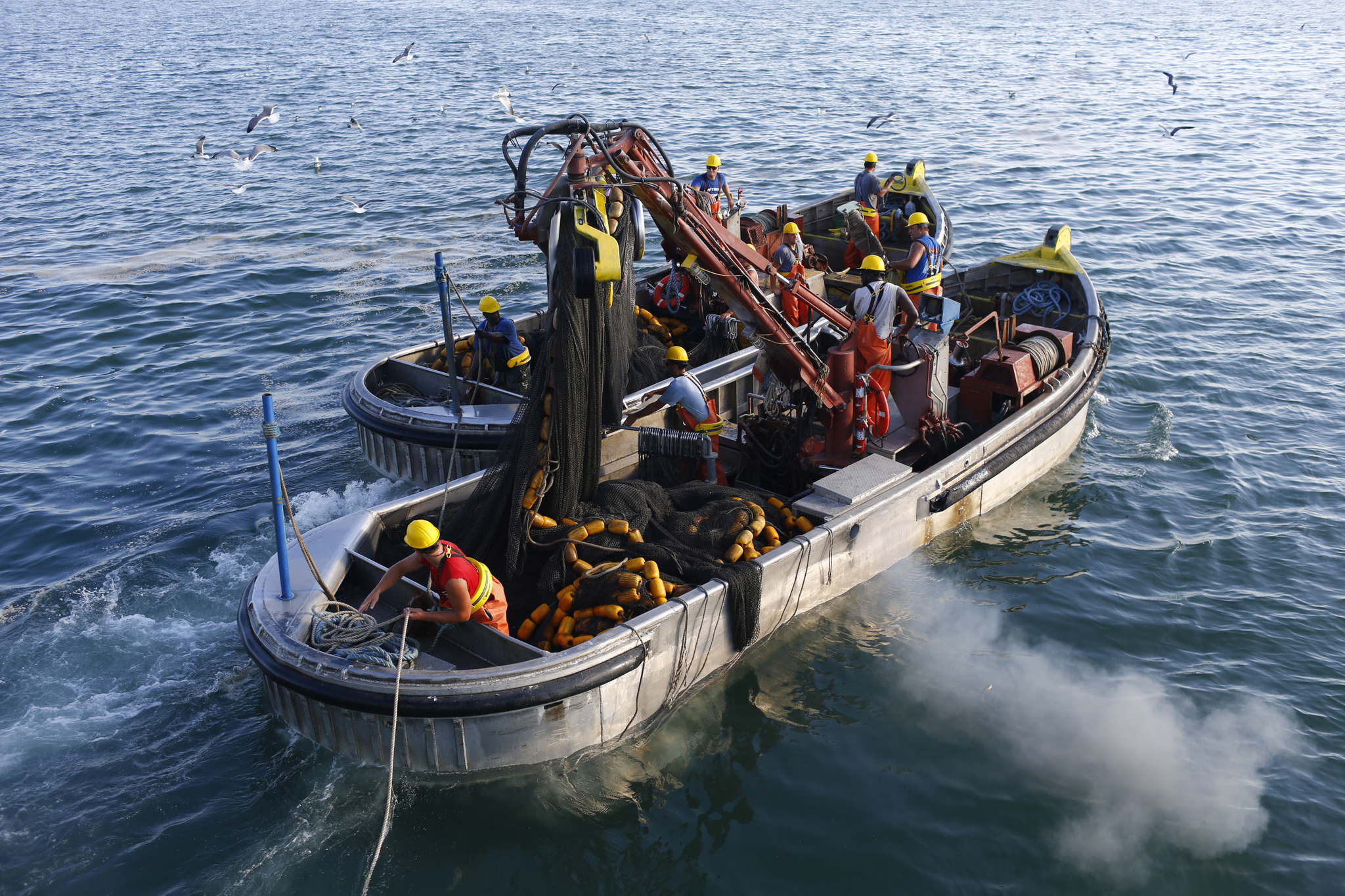
Ocean Harvesters owns and operates a fleet of more than 30 fishing vessels in the Atlantic Ocean and Gulf of America. The company’s purse-seine fishing operation is exclusively engaged in the harvest of menhaden, a small, nutrient-dense fish used to produce fish meal, fish oil, and fish solubles. Both its Atlantic and Gulf Menhaden fisheries are certified sustainable by the Marine Stewardship Council. Committed to responsible fishing operations, Ocean Harvesters is proud to be heir to a fishing legacy that extends nearly 150 years.
Press Contact
Stove Boat Communications
(202) 595-1212
contact@stoveboat.com
SOURCE: Ocean Harvesters
View the original press release on ACCESS Newswire


