
Key Takeaways
- Powder-coated wheels resist wear better than painted ones, but that durability only holds up with the right cleaning habits.
- A pH-neutral cleaner, soft brushes, and clean microfiber towels cover most of what powder coating needs for regular care.
- Cleaning rims while hot or letting cleaner sit too long are two of the fastest ways to damage the finish.
- A waterless spray can help maintain lightly soiled wheels between full washes, keeping brake dust from settling in.
- Sealants and ceramic-style coatings add a protective layer that makes every future cleaning session easier.
Powder-coated wheels look sharp, resist corrosion, and hold up to daily driving better than most finishes on the market. That durability can create a false sense of security, though, since the wrong cleaner or the wrong brush can still wear down even the toughest coating over time. This guide breaks down exactly what powder coating needs, which supplies protect the finish, and how to clean rims step by step without shortening their lifespan.
Why Powder Coated Wheels Need Special Care
Powder coating bonds to metal in a way that traditional paint simply cannot match, which is exactly why it holds up so well against curbs, gravel, and weather. That same strength can lead owners to assume any cleaner or brush will do the job safely. Regular maintenance still matters because brake dust, road salt, and everyday grime build up on the surface whether the coating underneath is tough or not. Skipping cleanings, or using the wrong products, gradually wears down the coating’s ability to resist corrosion and fading, even if the damage is not visible right away.
How Powder Coating Differs From Paint
Powder coating is not applied like liquid paint. It starts as a dry powder, sprayed onto the wheel electrostatically, then cured under heat to form a finish that bonds chemically to the metal underneath. That process is the reason powder-coated wheels can take more abuse than painted ones without chipping or fading.
Thicker, More Chemical-Resistant Finish
A cured powder coat typically measures 2 to 5 mils thick, compared to just 0.5 to 1 mil for standard liquid paint. That extra thickness creates a physical buffer against small impacts, road debris, and minor scrapes. The molecular structure of cured powder coating also resists many chemicals that would otherwise eat into traditional paint, giving it an edge in rough conditions.
What Brake Dust and Road Salt Do Over Time
Brake dust contains metallic particles and adhesive residue that struggle to permanently bond with a smooth powder-coated surface, which is good news for anyone who cleans regularly. Left alone for weeks, though, that dust can bake onto the wheel from heat generated during driving. Road chemicals used for de-icing, like magnesium chloride and calcium chloride, affect powder coating far less than they affect paint, though a winter left uncleaned can still dull the finish and create buildup that becomes much harder to remove later.
Supplies That Protect the Finish
Choosing a pH-Neutral Cleaner
A pH-neutral wheel cleaner or a mild car wash soap is the safest choice for regular maintenance. Acidic cleaners with a pH below 6, or alkaline cleaners with a pH above 8, can etch, dull, or slowly break down the coating.
Iron-removing cleaners are also a solid option for dissolving embedded brake dust without scrubbing, and many change color as they react with iron deposits, which makes it easy to see when the product is working.
Skip anything containing hydrofluoric acid or ammonium bifluoride, since those ingredients are known to attack the coating directly.
Soft Brushes and Microfiber Towels
Soft-bristled wheel brushes and detail brushes handle agitation without scratching the surface, and clean, high-quality microfiber towels dry the wheel without leaving marks. A few supply basics worth keeping on hand:
- A dedicated soft-bristled wheel brush, separate from any brush used elsewhere on the vehicle
- Small detail brushes for lug nut holes and tight spoke gaps
- Multiple clean microfiber towels, since a single towel loaded with grit can scratch just as easily as a stiff brush
- A pH-neutral wheel cleaner or mild car shampoo formulated for painted or coated surfaces
Step-by-Step Cleaning Process
Cool Down and Rinse First
Rims should always be cool to the touch before cleaning starts. Hot surfaces cause cleaning products to dry too quickly, which can leave spots or residue behind. Once the wheels are cool, a thorough rinse with moderate water pressure removes loose dirt and grit that could otherwise scratch the surface during the washing phase.
Apply Cleaner and Agitate Gently
Spray the pH-neutral cleaner evenly across the wheel and let it dwell for the time listed on the label, typically 3 to 5 minutes. Use a soft-bristled brush to work the cleaner into spokes, lug nut holes, and the inner barrel, where brake dust tends to collect most. Avoid letting the product sit longer than recommended, since extended dwell time can start to work against the coating rather than for it.
Rinse and Dry Immediately
Rinse thoroughly with clean water until every trace of cleaner is gone, since leftover soap can attract dirt or cause discoloration. Dry the wheel right away using a microfiber towel or compressed air to reach tight spots towels cannot access. Patting the surface dry, rather than dragging the towel across it, keeps the risk of marring to a minimum.
Waterless Cleaning Between Full Washes
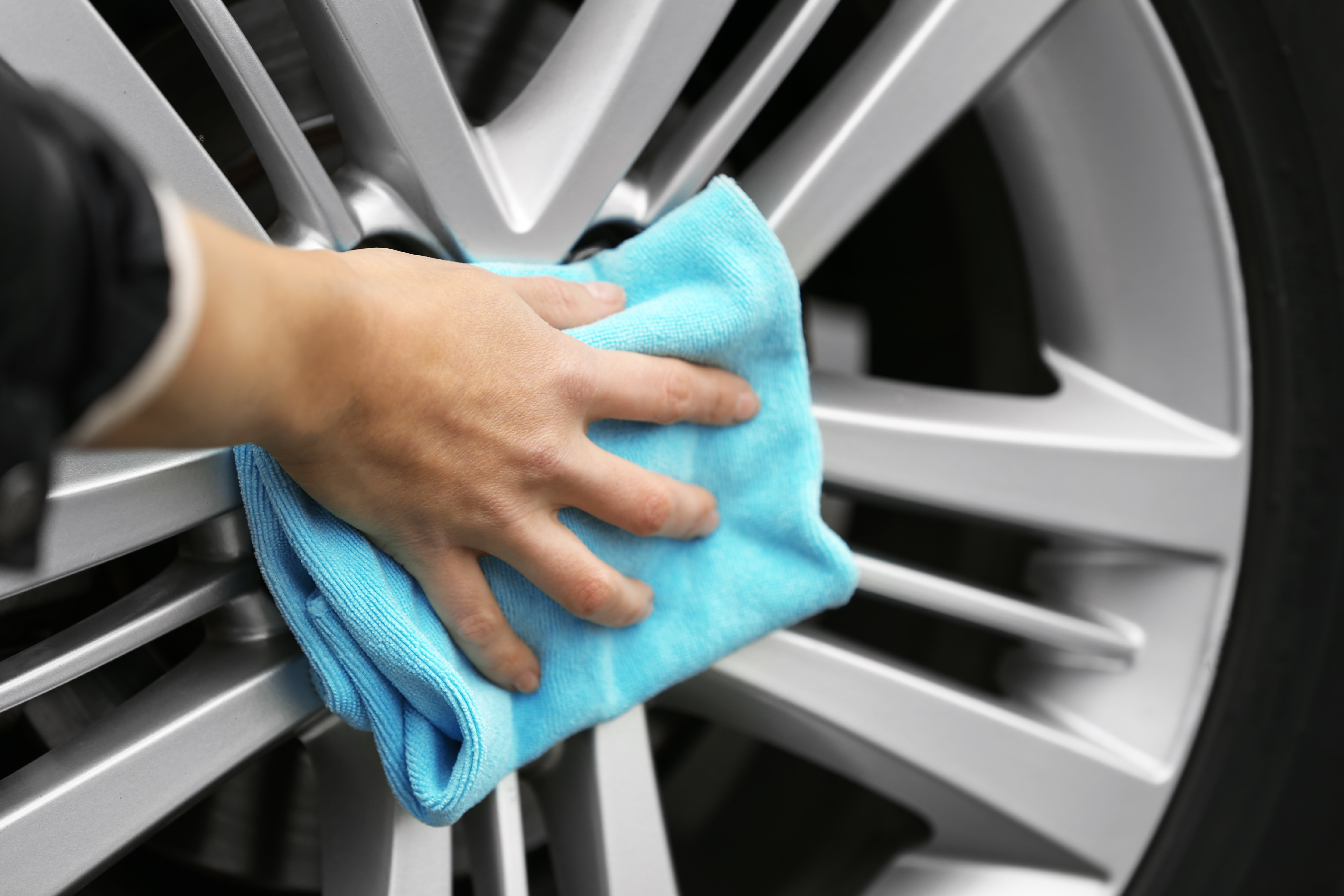
Full washes are not always practical between weekly rinses and monthly deep cleans, which is where waterless products fill a gap. A waterless spray works well for lightly soiled wheels carrying fresh road film or light dust, while heavier jobs involving mud or baked-on brake dust still call for a full wash.
The technique matters as much as the product: plenty of spray and a plush, clean microfiber towel let dirt lift away gently instead of dragging grit across the coating. Testing any new waterless cleaner on a small, hidden section of the wheel first is a smart habit, since it confirms the product plays nicely with the specific finish before it touches the whole wheel.
Mistakes That Damage Powder Coating
Abrasive Tools and Automatic Car Washes
Steel wool, scouring pads, and stiff or aggressive brushes should never touch powder coating. Once a scratch breaks through the coating, the exposed metal underneath becomes vulnerable to corrosion. Automatic car washes present a similar risk: the rotating brushes and harsh chemicals used in many automated systems were not designed with specialty finishes in mind, and repeated trips through one can wear down the coating faster than expected.
Temperature Shock and Cleaner Dwell Time
Spraying cold water on hot rims right after driving can cause the coating to develop micro-cracks from the sudden temperature change, which compromises its protective barrier over time. Letting cleaner dwell far longer than the label recommends creates a similar risk, since it gives the chemistry more time to work on the coating itself rather than just the dirt sitting on top. Tire dressing overspray is worth watching too, since many of those products contain petroleum distillates that can stain or slowly degrade the coating if left in contact with it.
Sealants and Coatings Extend Protection
A protective layer adds a barrier against contamination and makes every future cleaning session faster. Ceramic coatings designed for wheels bond to the powder coating itself, creating a hydrophobic surface that resists brake dust adhesion. Several options exist depending on how much protection and longevity a wheel owner wants:
- Spray waxes offer temporary protection that typically lasts 2 to 4 weeks
- Sealants can last up to 12 months with proper application
- Ceramic coatings can provide 2 to 5 years of protection
- Graphene coatings offer improved heat resistance and slickness compared to more traditional ceramic options
Whichever option gets chosen, the payoff is the same: less brake dust sticking to the surface, and an easier wipe-down every time the wheels need attention.
Consistent Care Keeps Wheels Looking New
A complicated routine is not needed to keep results consistent. Weekly rinses catch surface dust before it settles in, monthly detailed cleanings handle the buildup that rinsing alone misses, and a quick waterless wipe-down in between keeps light grime from ever becoming a real problem. Powder coating rewards the owners who stick with gentle, steady habits far more than those who wait and scrub hard once a season.
For anyone building out a simple wheel care routine, keeping a pH-neutral waterless detailing spray on hand for quick touch-ups between full washes is one of the easiest ways to keep powder-coated wheels looking new for years.
Willer Time
support@willertime.com
1(800) 555-1234
2020 N Academy Blvd Ste 261
#4504
Colorado Springs
CO
80909
United States


